A new Ancients system with the rulebook and army lists currently
available for free (who can resist that?), which promises a fast game
that is easy to get into - only the first 12 pages of the 24-page
rulebook are necessary for play.
The rules incorporate disorder,
loss of morale, orders and much else in a very compact package that has
been playtested and fine-tuned for years. More here:
Thursday, October 18, 2018


Saturday, October 6, 2018
Slingshot 320 with the Printers
Here is a list of contents with short summaries:
Guardroom
The debate continues on the historicity of the Bible.
The Sack of Chang’an - Part 2
The concluding half of Nicholas Spratt's article on the Tibetan Empire examines its formidable army.
Paraitakene with Commands & Colours
Playing the Battle Day battle with one of the fastest and easiest Ancients systems around.
Paraitakene with Tactica 2
A much larger and historically more nuanced system puts pike and elephant through their paces.
The Apogee of the Athenian Fleet
Periklis Deligiannis examines how the navy of the great Greek power reached its pinnacle just before its final fall.
Wargaming War Wagons
Chris Hahn looks at the historical use of this unusual weapon and how that use is replicated by popular rulesets.
Building the Lykian Hoplites
Duncan Head shows his techniques for assembling and painting the Hoplites employed at Paraitakene.
How Hard does a Horse Hit?
Justin Swanton calculates the impact power of a horse against infantry.
Reviews
A good crop of reviews included themed reviews on half a dozen books on Agincourt.


Guardroom
The debate continues on the historicity of the Bible.
The Sack of Chang’an - Part 2
The concluding half of Nicholas Spratt's article on the Tibetan Empire examines its formidable army.
Paraitakene with Commands & Colours
Playing the Battle Day battle with one of the fastest and easiest Ancients systems around.
Paraitakene with Tactica 2
A much larger and historically more nuanced system puts pike and elephant through their paces.
The Apogee of the Athenian Fleet
Periklis Deligiannis examines how the navy of the great Greek power reached its pinnacle just before its final fall.
Wargaming War Wagons
Chris Hahn looks at the historical use of this unusual weapon and how that use is replicated by popular rulesets.
Building the Lykian Hoplites
Duncan Head shows his techniques for assembling and painting the Hoplites employed at Paraitakene.
How Hard does a Horse Hit?
Justin Swanton calculates the impact power of a horse against infantry.
Reviews
A good crop of reviews included themed reviews on half a dozen books on Agincourt.


Monday, October 1, 2018
THIS is how you do a battle report video!
Chal of Little Wars TV umpires the Battle of Dertosa -
without telling the players that they are actually playing the Battle of
the Trebia in which Mago has a nasty cavalry ambush waiting on the
Roman left flank.
A couple of censor beeps when the Roman commanders learn the truth, having advanced their line well forward and leaving their rear vulnerable - just as their historical counterparts did.
A couple of censor beeps when the Roman commanders learn the truth, having advanced their line well forward and leaving their rear vulnerable - just as their historical counterparts did.
Video here:
http://www.littlewarstv.com/trebia-aar.html


http://www.littlewarstv.com/trebia-aar.html

Players
all good to go: two Roman commanders on the right and two Carthaginian
commanders on the left. Chal umpires in the middle. The Romans are
confident: who can resist their masses of heavy infantry?

The
moment in the game when Chal informs the players that this is actually
Trebia and Mago is ready to spring into action from the ravine on the
Roman left. If looks could kill...

Their
flanks in tatters, the Roman centre makes a desperate attempt to burst
through the Carthaginian line and head for safety. Hannibal's life is on
the line: will he die and lose the battle despite his earlier success?
Monday, September 24, 2018
big Battle DBA with really big figures
...at the Hereward Wargames Show in September. 54mm figures in a
Punic Wars battle that drew quite a bit of attention as well as a trophy
for a magnificent looking game.
Battle report anyone?
Battle report anyone?


Sunday, September 16, 2018
Slingshot 319 with the Printers
Slingshot 319 is with the printers and will hit your postboxes* soon.
Here are the article titles with a short summary of content.
• Kinging it in Ulster – Part 2 – by Mick Hession
The concluding half of the account of the opportunistic knight de Courcy's attempt to carve out a lordship in northern Ireland.
• Tackling Telamon with l'Art de la Guerre – by Chris Hahn
The first of a four-part series that recreates the Battle of Telamon (when a Gallic raiding army in Italy became the patty of a Roman burger) using four popular rulesets.
• War elephants – by Patrick Waterson
Tracing the history of the war elephant examining the different ways the elephant was used in battle.
• Paraetacene Writ Large with DBMM – by Duncan Head
Recreating the famous Successor battle with huge DBMM armies.
• Becoming an Ancients Wargamer – by Keith Flint
How a confirmed WW2 gamer discovered what a good thing Ancients warfare is.
• The Sack of Chang'an – Part 1 – by Nicholas Spratt
How many people know that Tibet was once an empire that humbled China and conquered its capital city? The first part of a two-part article that describes the apogee of the realm of Lhasa.
• Origins of the Macedonian Infantry – by Duncan Head
Who founded the Macedonian heavy infantry and what did it originally look like? Duncan Head answers these questions.
• Slingshot Reviews
A set of reviews on five books that study the Second Scottish War of Independence.
*If if doesn't hit your postbox that is either a) because the postman was chased away by your dog, or b) you don't have a subscription. We can do something about b) – soa.org.uk/joomla

• Kinging it in Ulster – Part 2 – by Mick Hession
The concluding half of the account of the opportunistic knight de Courcy's attempt to carve out a lordship in northern Ireland.
• Tackling Telamon with l'Art de la Guerre – by Chris Hahn
The first of a four-part series that recreates the Battle of Telamon (when a Gallic raiding army in Italy became the patty of a Roman burger) using four popular rulesets.
• War elephants – by Patrick Waterson
Tracing the history of the war elephant examining the different ways the elephant was used in battle.
• Paraetacene Writ Large with DBMM – by Duncan Head
Recreating the famous Successor battle with huge DBMM armies.
• Becoming an Ancients Wargamer – by Keith Flint
How a confirmed WW2 gamer discovered what a good thing Ancients warfare is.
• The Sack of Chang'an – Part 1 – by Nicholas Spratt
How many people know that Tibet was once an empire that humbled China and conquered its capital city? The first part of a two-part article that describes the apogee of the realm of Lhasa.
• Origins of the Macedonian Infantry – by Duncan Head
Who founded the Macedonian heavy infantry and what did it originally look like? Duncan Head answers these questions.
• Slingshot Reviews
A set of reviews on five books that study the Second Scottish War of Independence.
*If if doesn't hit your postbox that is either a) because the postman was chased away by your dog, or b) you don't have a subscription. We can do something about b) – soa.org.uk/joomla

Saturday, March 24, 2018
Slingshot 306 about to hit the streets
...or at least the postboxes.
Here are the contents:
Battle Day Pack - Paraetacene - 𝘣𝘺 𝘙𝘪𝘤𝘩𝘢𝘳𝘥 𝘓𝘰𝘤𝘬𝘸𝘰𝘰𝘥
Paraetacene with l’Art de la Guerre - 𝘣𝘺 𝘊𝘩𝘳𝘪𝘴 𝘏𝘢𝘩𝘯
Holiday in Cambodia, Part 1 - 𝘣𝘺 𝘕𝘪𝘤𝘩𝘰𝘭𝘢𝘴 𝘚𝘱𝘳𝘢𝘵𝘵
Twilight Triumph: the Battle of Chalons - 𝘣𝘺 𝘑𝘶𝘴𝘵𝘪𝘯 𝘚𝘸𝘢𝘯𝘵𝘰𝘯
Wargaming Belisarius vs the Vandals - 𝘣𝘺 𝘚𝘪𝘮𝘰𝘯 𝘔𝘢𝘤𝘋𝘰𝘸𝘢𝘭𝘭
Slingshot Reviews: Scipio Africanus - Greater than Napoleon - 𝘳𝘦𝘷𝘪𝘦𝘸𝘦𝘥 𝘣𝘺 𝘋𝘶𝘯𝘤𝘢𝘯 𝘏𝘦𝘢𝘥
Slingshot Reviews: Pyrrhus of Epirus - 𝘳𝘦𝘷𝘪𝘦𝘸𝘦𝘥 𝘣𝘺 𝘛𝘪𝘮𝘰𝘵𝘩𝘺 𝘔𝘺𝘢𝘭𝘭
Slingshot Reviews: God’s Wolf - 𝘳𝘦𝘷𝘪𝘦𝘸𝘦𝘥 𝘣𝘺 𝘕𝘪𝘤𝘬 𝘏𝘢𝘳𝘣𝘶𝘥

Here are the contents:
Battle Day Pack - Paraetacene - 𝘣𝘺 𝘙𝘪𝘤𝘩𝘢𝘳𝘥 𝘓𝘰𝘤𝘬𝘸𝘰𝘰𝘥
Paraetacene with l’Art de la Guerre - 𝘣𝘺 𝘊𝘩𝘳𝘪𝘴 𝘏𝘢𝘩𝘯
Holiday in Cambodia, Part 1 - 𝘣𝘺 𝘕𝘪𝘤𝘩𝘰𝘭𝘢𝘴 𝘚𝘱𝘳𝘢𝘵𝘵
Twilight Triumph: the Battle of Chalons - 𝘣𝘺 𝘑𝘶𝘴𝘵𝘪𝘯 𝘚𝘸𝘢𝘯𝘵𝘰𝘯
Wargaming Belisarius vs the Vandals - 𝘣𝘺 𝘚𝘪𝘮𝘰𝘯 𝘔𝘢𝘤𝘋𝘰𝘸𝘢𝘭𝘭
Slingshot Reviews: Scipio Africanus - Greater than Napoleon - 𝘳𝘦𝘷𝘪𝘦𝘸𝘦𝘥 𝘣𝘺 𝘋𝘶𝘯𝘤𝘢𝘯 𝘏𝘦𝘢𝘥
Slingshot Reviews: Pyrrhus of Epirus - 𝘳𝘦𝘷𝘪𝘦𝘸𝘦𝘥 𝘣𝘺 𝘛𝘪𝘮𝘰𝘵𝘩𝘺 𝘔𝘺𝘢𝘭𝘭
Slingshot Reviews: God’s Wolf - 𝘳𝘦𝘷𝘪𝘦𝘸𝘦𝘥 𝘣𝘺 𝘕𝘪𝘤𝘬 𝘏𝘢𝘳𝘣𝘶𝘥

Wednesday, March 14, 2018
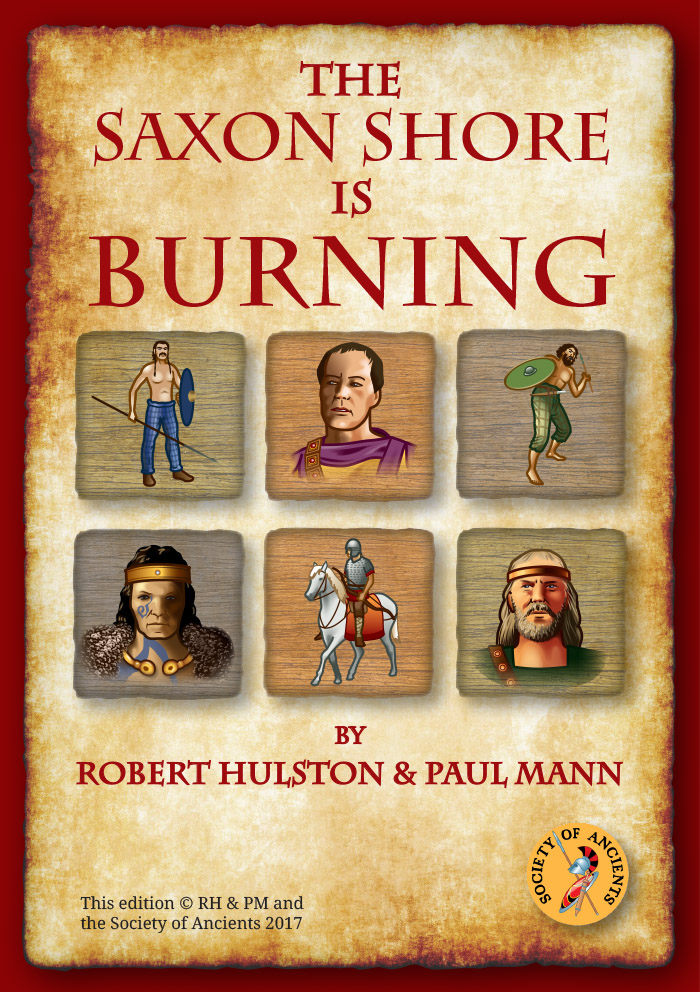
The Saxon Shore is Burning
The deluxe second edition of the popular Society of Ancients game is now available for order. With the mapboard and counters now doubled in size, the counters printed on extra-thick board, and the artwork completely redone, you have a game that gives full value for its price.

Here is an extract from the ruleset:
This is a two-player simulation of the Barbarian Conspiracy of 367 A.D. Against Roman Britain. In that year the Scotti of Ireland, Atacotti of Western Scotland, Picti of Eastern Scotland and the Saxoni of Upper Germany/Lower Denmark joined forces to take advantage of the withdrawal of the province’s three legions to the continent in one of the interminable Imperial Succession disputes. Britain was rich and prosperous but under-defended, so the Barbarians were able to loot and pillage up and down the country, running riot and killing the Count of the Saxon Shore. The Romans were eventually able to restore order and by 369 A.D. the province was secure again, though permanently weakened.

The game components consist of
The counters are printed in thick card and will require cutting out. They are one-sided and do not need to be glued back-to-back with each other.

The game is designed for 2 players, but may be played by 3, 4 or 5 players. there is one Roman and four Barbarian factions: Scotti, Picti, Atacotti and Saxoni. One player takes the side of the Romans, the others take the side of the Barbarians. In a 2-player game the Barbarian player will control all the Barbarian factions. In a 3-player game one Barbarian player will control the Scotti/Atacotti and the other the Picti/Saxoni. In a 4 player game one Barbarian player will control the Scotti, one the Picti and one the Saxoni. Barbarian players dice each turn for control of the Atacotti. In a 5-player game each Barbarian player controls one of the 4 barbarian factions.

At the beginning of the game the Roman player has at his disposal a single fleet, two commanders (one Dux and one Comes), 36 steps of infantry and 24 steps of cavalry, and initially controls all the towns. He is also able to set up 23 forts along the coastline in Roman territory.
Each Barbarian faction has one chief and 40 steps of infantry. The Scotti and Saxoni each have three fleets whilst the Atacotti and Picti each have two. The Roman are thus heavily outnumbered but start from well-fortified positions.
The game lasts for 10 turns. The objective of the Barbarian player is to destroy as many Roman towns and forts as he can, and demolish Hadrian's Wall, whilst the Roman player must hold on to as much as possible until the end of the game.
A turn sequence incorporates attrition for units in woods or bog, lightning strike raids by Barbarian troops transported by fleets, overrunning of small detachments by larger forces, pitched battles, desertion of demoralised Roman troops, the sacking of towns and forts, and the arrival of reinforcements. Roman commanders and Barbarian chiefs play their part in organising attacks and contributing to their forces' combat factor.

Combat can be resolved either by dice or by using 'scissors-paper-stone' (quicker and more fun).
The game plays to a tense finish, as the Romans yield as slowly as possible, using their cavalry and strong fortifications against a numerically superior foe until the last turn of the game, when the legions finally arrive from the continent to save the day.
Here is an extract from the ruleset:
This is a two-player simulation of the Barbarian Conspiracy of 367 A.D. Against Roman Britain. In that year the Scotti of Ireland, Atacotti of Western Scotland, Picti of Eastern Scotland and the Saxoni of Upper Germany/Lower Denmark joined forces to take advantage of the withdrawal of the province’s three legions to the continent in one of the interminable Imperial Succession disputes. Britain was rich and prosperous but under-defended, so the Barbarians were able to loot and pillage up and down the country, running riot and killing the Count of the Saxon Shore. The Romans were eventually able to restore order and by 369 A.D. the province was secure again, though permanently weakened.

The game components consist of
- a mapboard - two sections measuring 58cm x 42 cm, together forming a map of Britain 58 cm x 84 cm
- 400 counters, each measuring 18mm x 18mm, with replacement and spare counters
- a reference sheet
- a rulebook
The counters are printed in thick card and will require cutting out. They are one-sided and do not need to be glued back-to-back with each other.


At the beginning of the game the Roman player has at his disposal a single fleet, two commanders (one Dux and one Comes), 36 steps of infantry and 24 steps of cavalry, and initially controls all the towns. He is also able to set up 23 forts along the coastline in Roman territory.
Each Barbarian faction has one chief and 40 steps of infantry. The Scotti and Saxoni each have three fleets whilst the Atacotti and Picti each have two. The Roman are thus heavily outnumbered but start from well-fortified positions.
The game lasts for 10 turns. The objective of the Barbarian player is to destroy as many Roman towns and forts as he can, and demolish Hadrian's Wall, whilst the Roman player must hold on to as much as possible until the end of the game.
A turn sequence incorporates attrition for units in woods or bog, lightning strike raids by Barbarian troops transported by fleets, overrunning of small detachments by larger forces, pitched battles, desertion of demoralised Roman troops, the sacking of towns and forts, and the arrival of reinforcements. Roman commanders and Barbarian chiefs play their part in organising attacks and contributing to their forces' combat factor.

Combat can be resolved either by dice or by using 'scissors-paper-stone' (quicker and more fun).
The game plays to a tense finish, as the Romans yield as slowly as possible, using their cavalry and strong fortifications against a numerically superior foe until the last turn of the game, when the legions finally arrive from the continent to save the day.
The game is available for £15 (£12 for Society members) from the Society website. Click here for more details. And happy gaming!
Subscribe to:
Posts (Atom)